The Devil meaning in a three-card reading
In this deck, The Devil means attachment. Upright, it asks you to name the bargain beneath the temptation. Reversed, it asks you to test whether the chain is looser than it looks.
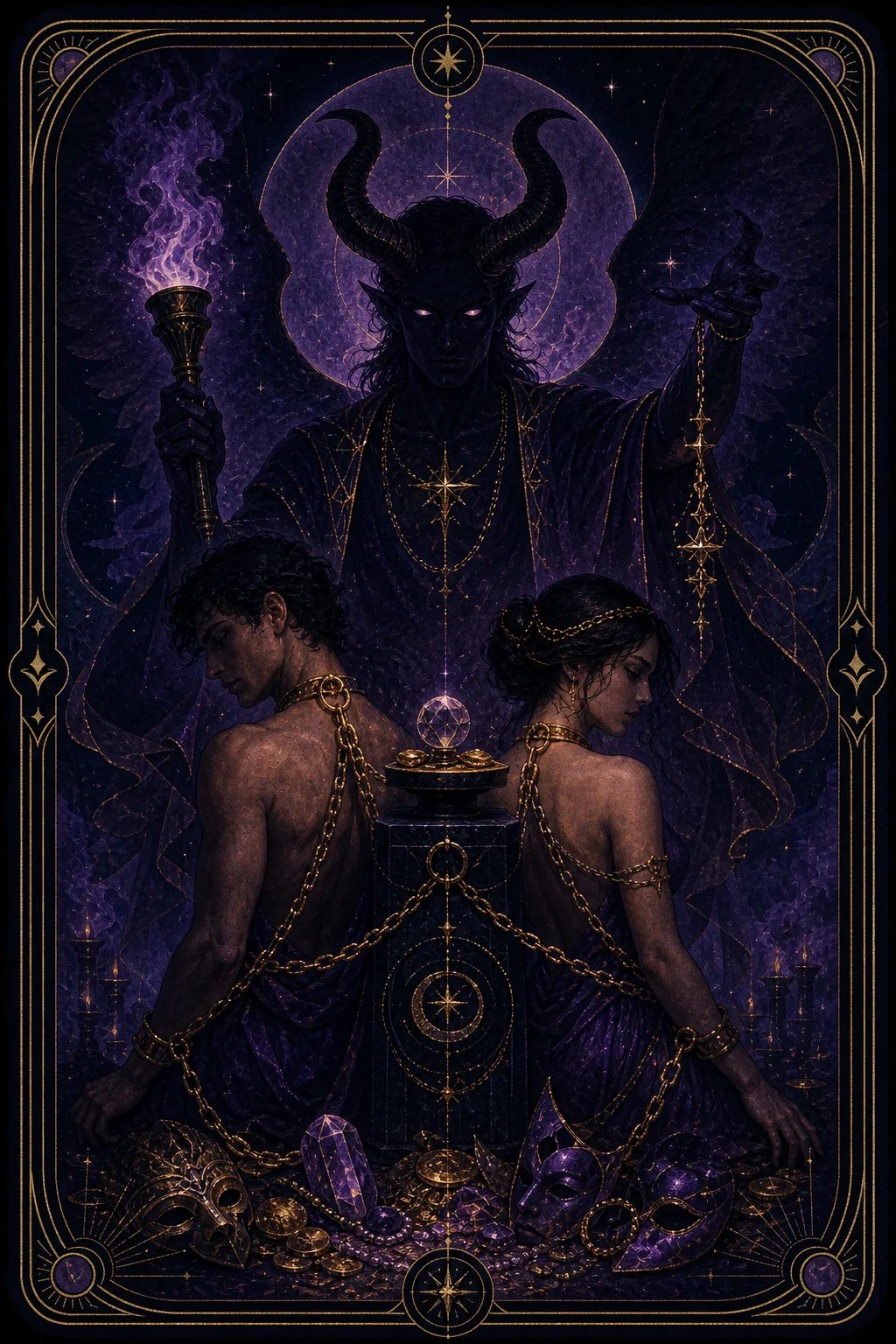
What the picture shows
This illustration shows a large, horned figure with glowing eyes behind two people who sit with their backs to us. Loose chains run from their necks to a central block. The figure raises a flaming torch in one hand, and a faint halo of light surrounds the horns. A small heap of masks, jewels and gold lies at the base.
In the Rider–Waite–Smith tradition the Devil stands above a man and a woman who are chained at the neck. The chains are usually drawn loose enough to lift off, and that detail is the heart of the card. Readers often take it to mean that the bond is held in place by habit and belief rather than by force. The masks and treasure in this deck add the theme of appearance and appetite. Nothing here depicts a literal being; it is a picture of attachment.
Upright in practice
Upright, the Devil is the card of attachment, and its message is to name the bargain beneath the temptation. Almost everyone has a habit, a relationship dynamic or a pursuit that offers something real at a cost they prefer not to total. The card does not condemn the appeal. It asks what you receive, what you pay and whether the trade still suits you. Writing both columns on paper can help. If a pattern feels beyond what you can change alone, talking with a qualified professional is a sensible step. The card itself offers reflection, not treatment.
Reversed in practice
Reversed, the Devil asks you to test whether the chain is looser than it looks. In the picture, the chains could be lifted. This deck uses the reversed card to point at a restriction you may have accepted as fixed. Ask whether you are stuck because you cannot leave or because leaving feels uncomfortable. Try changing one small element of the pattern and watch what happens. Often the first sign of freedom is modest, such as skipping one habitual action. A change of emphasis can begin there, with no need to resolve everything at once.
Three questions to carry
- What do I get from this pattern, and what does it cost?
- If the chain were loose, what would I do first?
- Who could I talk to about this without being judged?
Beside its neighbours
The Devil follows Temperance and precedes the Tower. After Temperance's balance, it shows what happens when something takes more than its share. Before the Tower, it sets a held-on structure next to one that falls apart, so the two cards read well as a pair about false security. Beside the Tower, the Devil can suggest that a sudden break may be the end of a bond you had not examined. Beside Temperance, it asks for moderation.