Temperance meaning in a three-card reading
In this deck, Temperance means integration. Upright, it asks you to combine opposites in workable proportions. Reversed, it asks you to adjust an imbalance before adding more.
What the picture shows
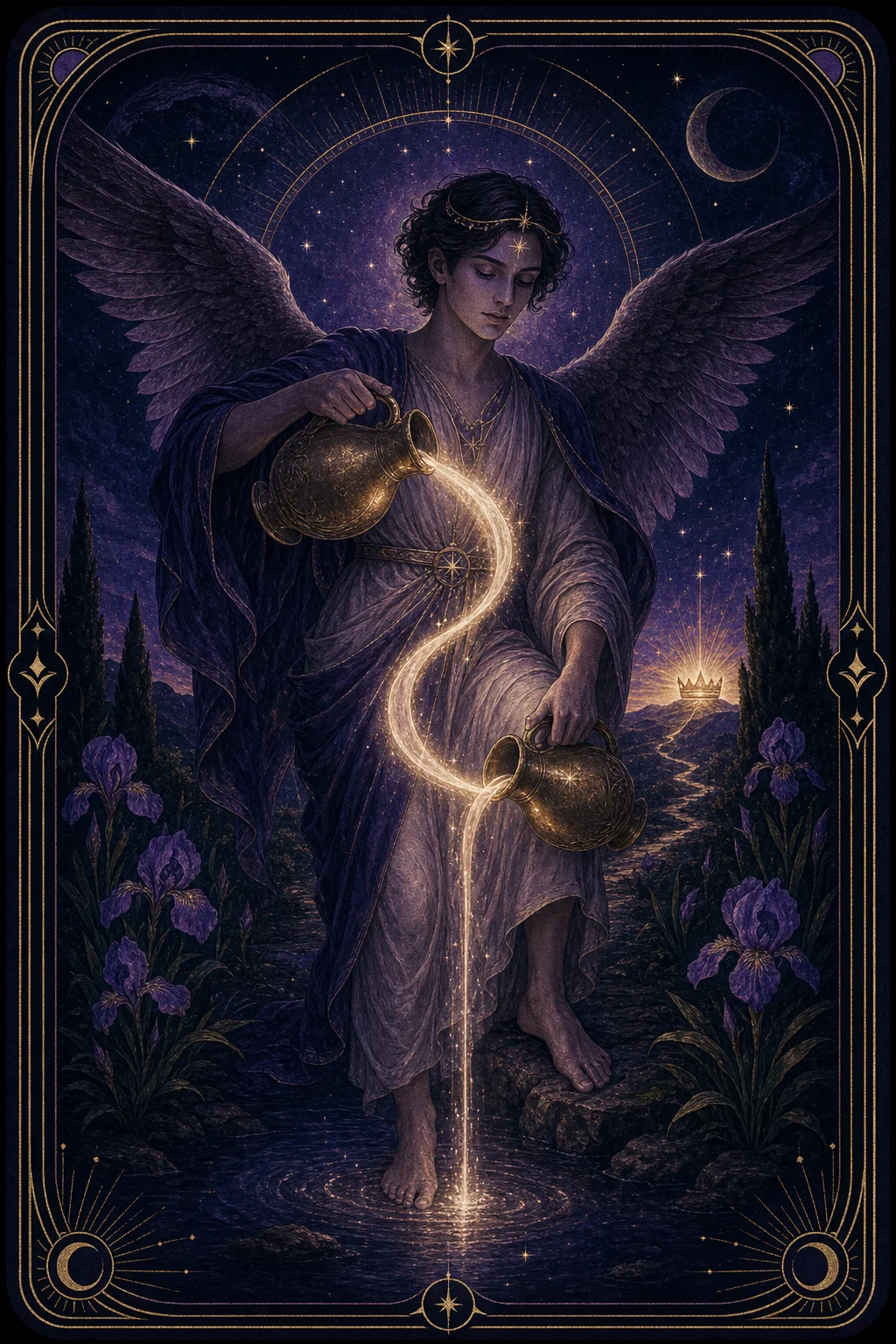
This illustration shows a winged figure standing barefoot at the edge of a pool, pouring a glowing stream of light from one golden jug into another. Irises grow on both sides, a pale path leads to a small crown glimmering on the horizon, and a crescent moon hangs in the sky.
In the Rider–Waite–Smith tradition Temperance is an angelic figure with one foot on land and one in water, pouring liquid between two cups. The flowing stream between the vessels is the central image, and it is usually read as blending, balance and patience. The path to a distant glow is also a traditional element. Here the stream forms a continuous curve, so nothing is lost between the jugs. The picture asks for a slow, careful hand.
Upright in practice
Upright, Temperance describes integration, which means combining opposites in workable proportions. Most useful solutions are mixtures, such as effort and rest, structure and flexibility, or ambition and kindness. The card asks you to avoid choosing one extreme and to find a ratio you can sustain. Think of it as adjusting a recipe. Taste, add a little, wait, taste again. Look at an area where you have been oscillating between too much and too little, and try a measured middle for a week. Then observe how it feels in practice, not in theory.
Reversed in practice
Reversed, Temperance asks you to adjust an imbalance before adding more. When something is off, the instinct is often to pour in extra effort, extra rules or extra distraction. This deck frames the reversed card as a prompt to stop adding. Ask what is currently overweighted, such as work hours, obligations, screen time or self-criticism, and what is underweighted. A small correction on one side is usually more effective than a large one on the other. The goal is not perfection but a mix that you can keep up on an ordinary day.
Three questions to carry
- What two opposites could I combine in better proportion?
- Where am I adding more when I should be adjusting?
- What ratio could I keep up on an ordinary, tired day?
Beside its neighbours
Temperance follows Death and precedes the Devil. After the ending that Death marks, it begins the slow work of blending what is left. Before the Devil, it sets patience beside attachment, which is a useful contrast: balance is easy to lose when something holds on tightly. Beside the Devil, Temperance can suggest that moderation is the practical answer to a pull that has grown too strong.