Justice meaning in a three-card reading
In this deck, Justice means accountability. Upright, it asks you to weigh evidence and consequences together. Reversed, it asks you to correct a judgement distorted by defensiveness.
What the picture shows
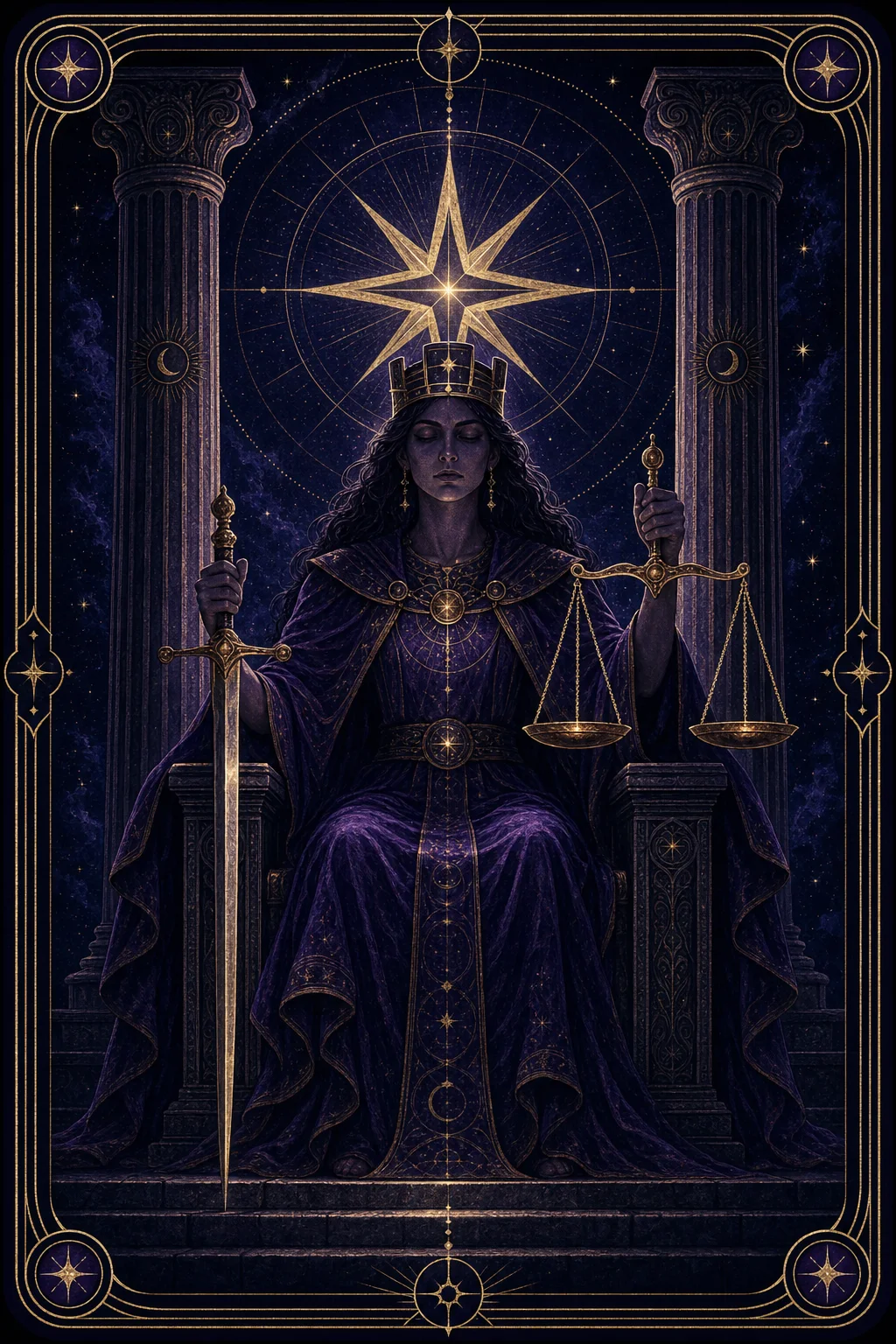
This illustration shows a crowned woman seated in the centre of a colonnade. A long, upright sword is in one hand, and a pair of balanced golden scales hangs from the other. A large eight-pointed star shines above her crown, and tall pillars rise on either side.
In the Rider–Waite–Smith tradition Justice holds a sword and scales and sits between two pillars, with a veil or curtain behind her. The sword is read as clear judgement with real consequences. The scales stand for weighing before acting. The pillars suggest a formal setting, where decisions are made openly. In this deck her eyes are closed and her posture is square, which adds to the sense of a process that cannot be hurried or flattered.
Upright in practice
Upright, Justice asks you to weigh evidence and consequences together. It is a card for decisions that deserve a calm, honest accounting, whether that means a contract, a disagreement or your own conduct. List what is known, what is assumed and what each choice would cost. The sword reminds you that a decision has consequences, and the scales remind you that they should be considered first. The card also invites fairness toward yourself, including a plain acknowledgement of your own part. Honest accounting tends to produce a clearer next step than argument does.
Reversed in practice
Reversed, Justice asks you to correct a judgement distorted by defensiveness. When we feel criticised, our accounting often tilts in our own favour or against ourselves. In this deck the emphasis is on noticing the tilt, not on condemning it. Ask which facts you have been weighing lightly because they are uncomfortable, and which you have been weighing too heavily because they feel like punishment. Try describing the situation as you would for a fair-minded friend, and see whether the balance changes.
Three questions to carry
- What are the facts, apart from how I feel about them?
- Which uncomfortable detail have I been weighing too lightly?
- Would I judge a friend in this position the way I judge myself?
Beside its neighbours
Justice follows the Wheel of Fortune and precedes the Hanged One. After the Wheel's change, it asks for an honest account of what happened. Before the Hanged One, it hands the weighing over to a pause: once the facts are laid out, a different angle may be worth taking. Beside the Hanged One, Justice can suggest looking at the same evidence from a new position. Beside the Wheel, it separates circumstance from responsibility.